Two synchronised labels
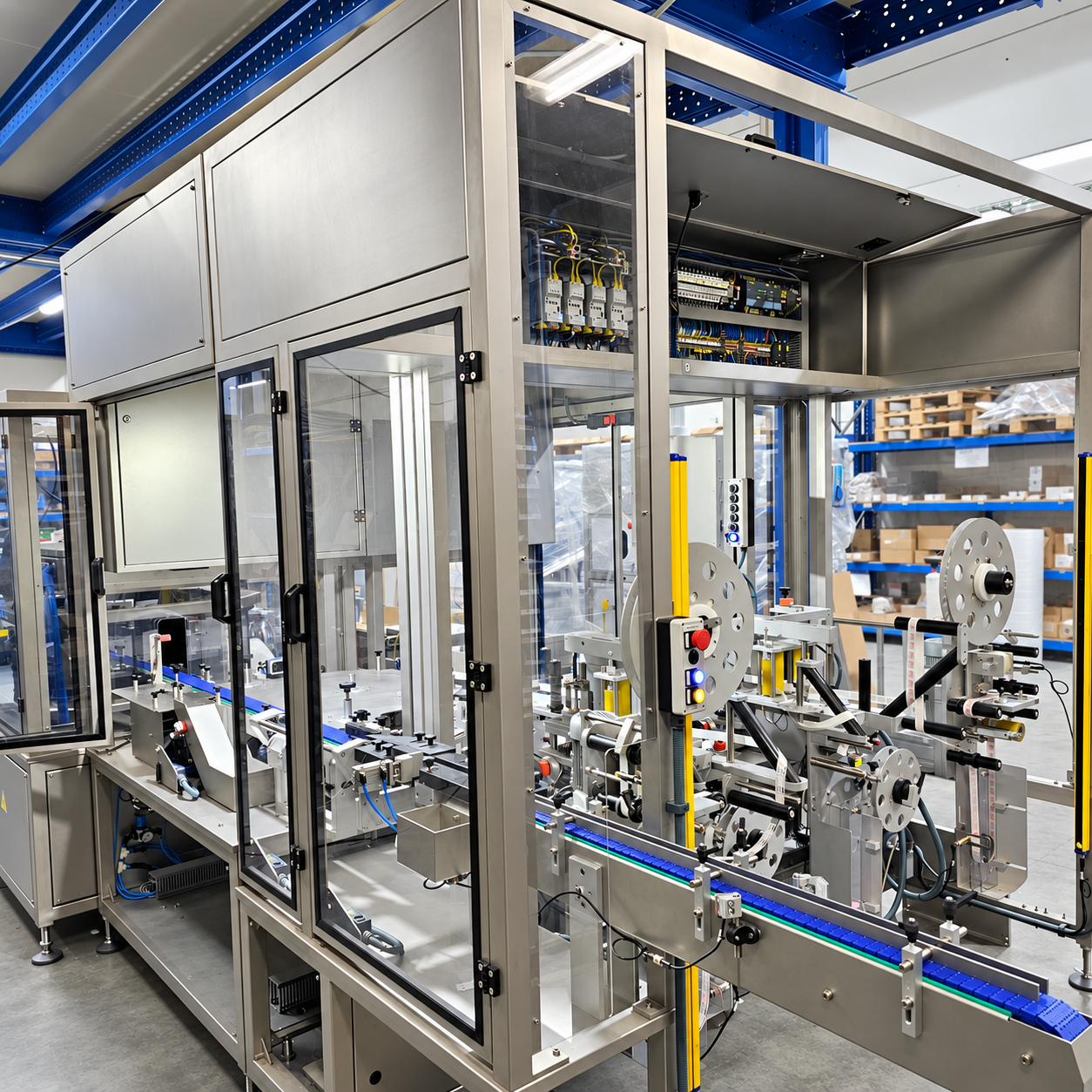
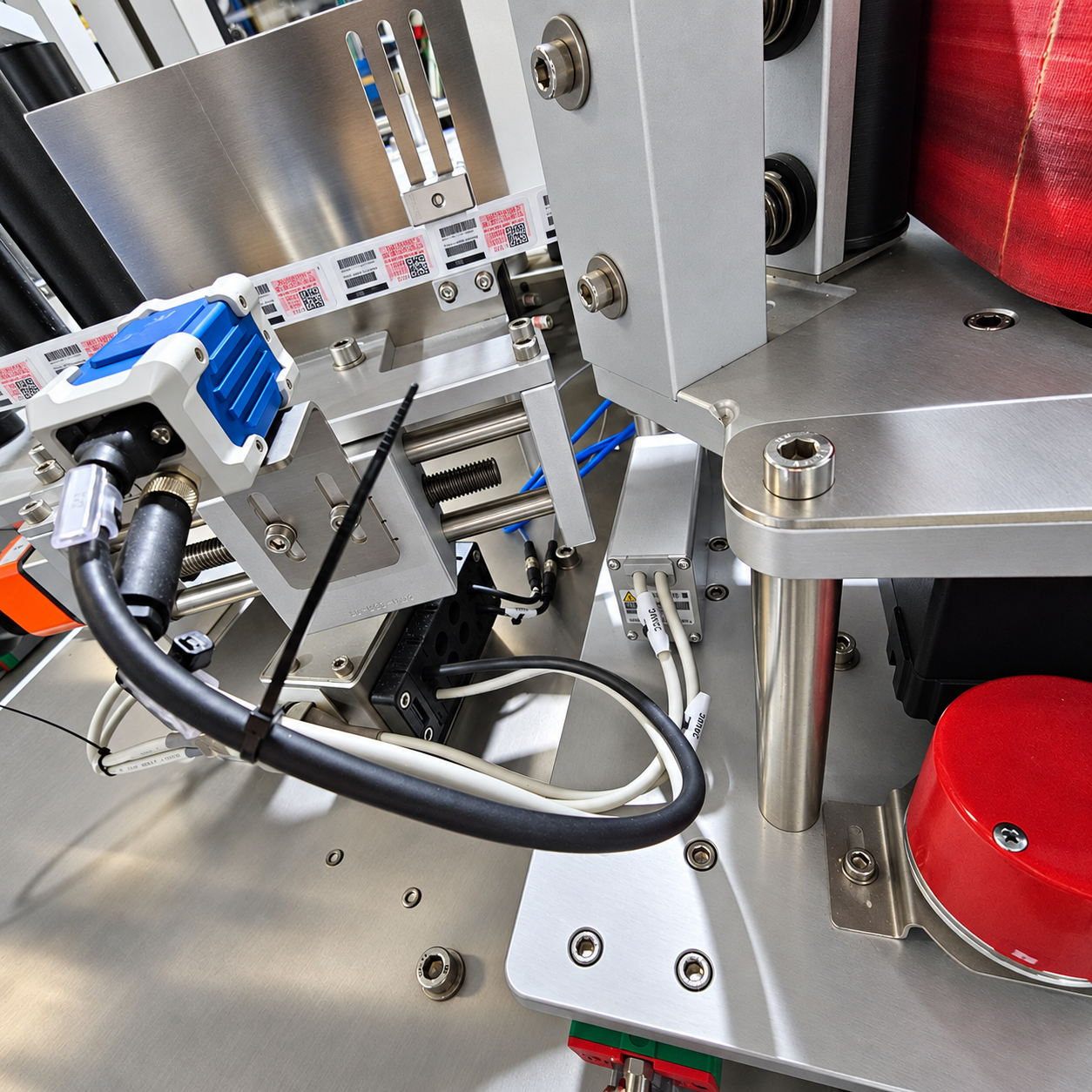
One head applies the product label and a second applies the SENASA regulatory seal. Each label path includes TTO printing for variable data.

Success story · Veterinary pharmaceuticals
One machine for six formats, two identification routes and complete pharmaceutical traceability.
The challenge
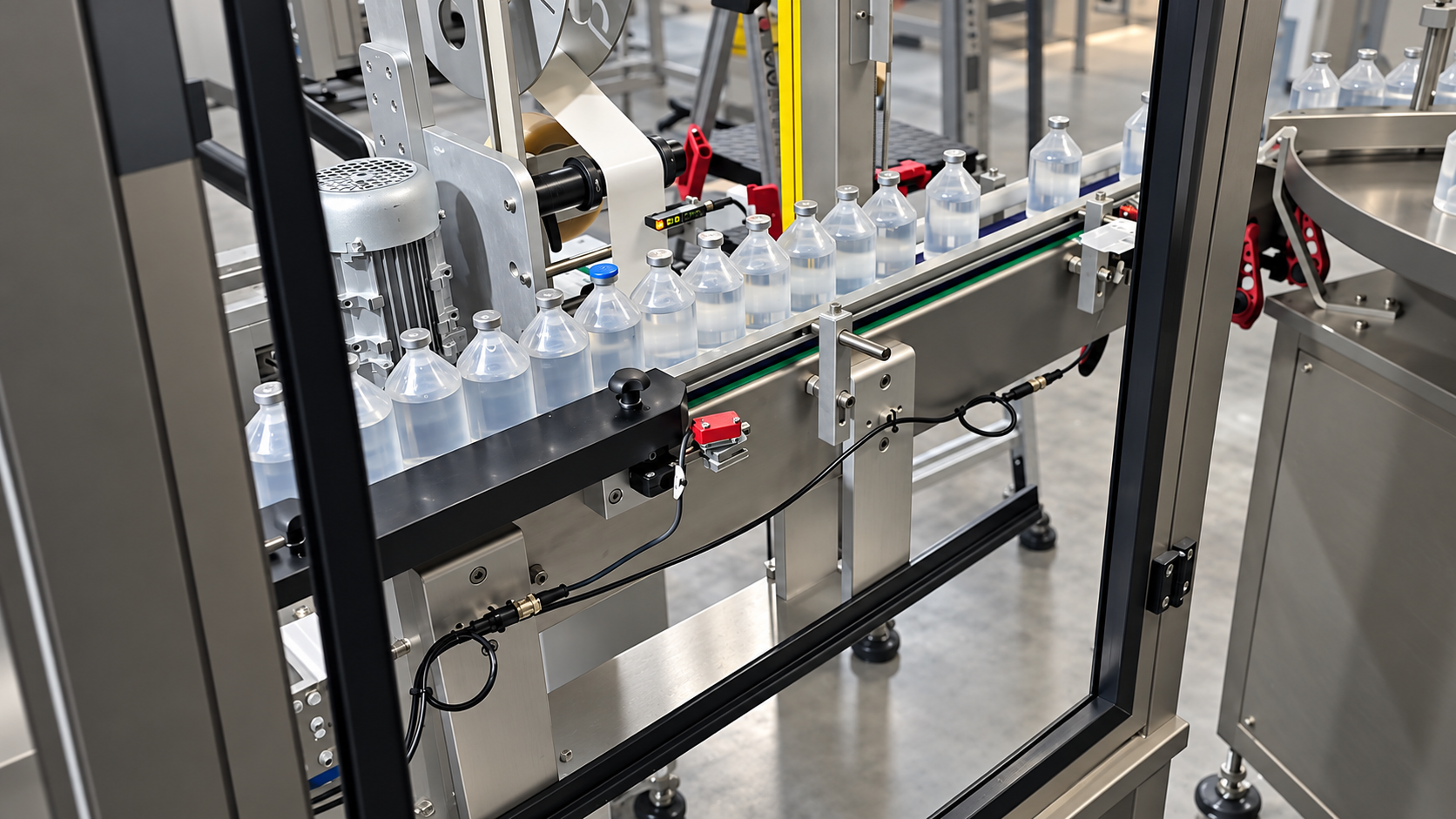
The project had to process six vial formats from 4 to 250 ml, each with different output and identification requirements. Formats from 4 to 50 ml required two printed, serialised labels. The 125 ml format could be labelled or laser marked, depending on the configuration, while the 250 ml format was marked exclusively by laser. Every unit had to be verified, traced and automatically rejected if any issue occurred.
The solution
The rotary labeller brings every process into one architecture, with format recipes and unit tracking throughout the complete route.
One head applies the product label and a second applies the SENASA regulatory seal. Each label path includes TTO printing for variable data.
Each vial serial number is associated with the serial number of its regulatory seal, preserving the relationship throughout the process.
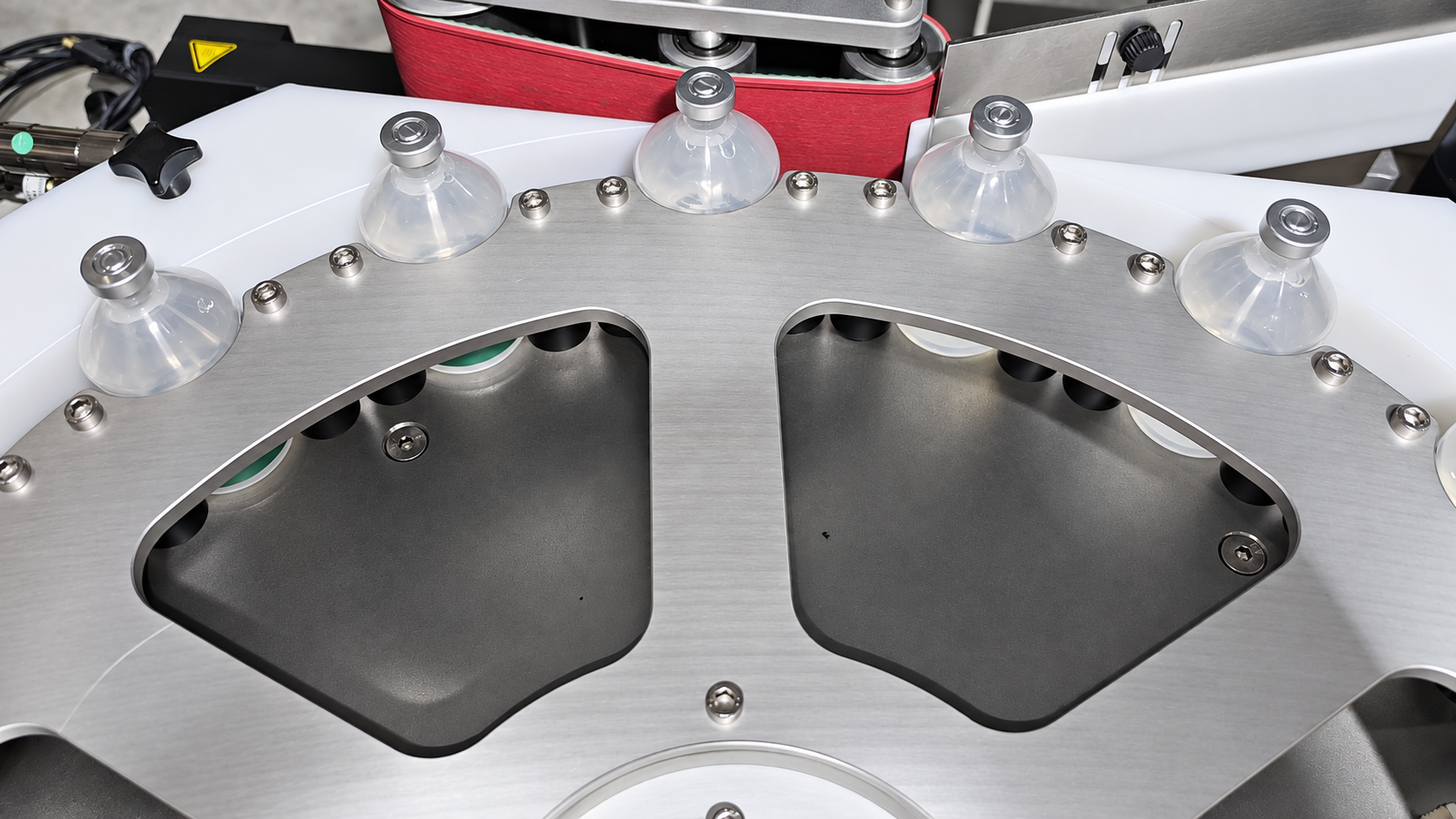
Two cameras perform OCR on the printed labels, a third verifies serial association, a fourth confirms label presence inside the rotary system and a fifth uses OCR to verify the laser-marked data.
Vials intended for laser marking are dynamically oriented without stopping. OCR then verifies the mark and triggers rejection if it does not match.
Format range
Output was defined for each format and process while maintaining unit-level control at maximum speed.
| Format | Material | Maximum output | Process |
|---|---|---|---|
| 4 ml | Glass | 400 vials/min | Dual labelling (main label + SENASA stamp) |
| 10 ml | Plastic | 355 vials/min | Dual labelling (main label + SENASA stamp) |
| 25 ml | Plastic | 325 vials/min | Dual labelling (main label + SENASA stamp) |
| 50 ml | Plastic | 155 vials/min | Dual labelling (main label + SENASA stamp) |
| 125 ml | Plastic | 130 vials/min | Labelling or laser marking |
| 250 ml | Plastic | 105 vials/min | Laser marking |
Machine vision
Inspection goes beyond detecting a label. The system uses OCR to read printed information, links the serial numbers on both labels, confirms application and verifies the laser mark. Any non-conforming vial is automatically diverted before the outlet.
Pharmaceutical validation
The solution was developed to GMP and 21 CFR Part 11 criteria, with user, recipe, alarm and traceability management. The project included FAT, SAT, IQ, OQ and PQ, together with the documentation and testing required for validation in veterinary pharmaceutical production.
Result
The platform combines labelling and TTO printing for higher-output formats, an alternative labelling or laser configuration for 125 ml and laser-only marking for 250 ml. Common automation simplifies changeovers while preserving verifiable end-to-end traceability.